-

-

call us
+91-9888163636



Pregnancy is a beautiful and life-changing journey, but it also requires careful attention to both the mother's and baby's health. While many pregnancies progress without major issues, some women may experience complications that require timely medical care. Understanding these complications and taking preventive measures can significantly improve maternal and fetal outcomes.
At Moruf Lifesciences, a trusted women healthcare pharma company and pregnancy care pharma company, we are committed to supporting maternal health through high-quality pregnancy care solutions, nutritional supplements, and innovative gynecology products. Our mission is to empower healthcare professionals with reliable pharmaceutical products that contribute to healthier pregnancies across India.
What Are Pregnancy Complications?
Pregnancy complications are health conditions that affect the mother, baby, or both during pregnancy. Some complications are mild and manageable, while others require immediate medical intervention. Regular prenatal care plays a vital role in identifying potential risks early and ensuring appropriate treatment.
Early diagnosis, healthy lifestyle choices, and proper medical guidance can help reduce the chances of serious pregnancy-related complications.
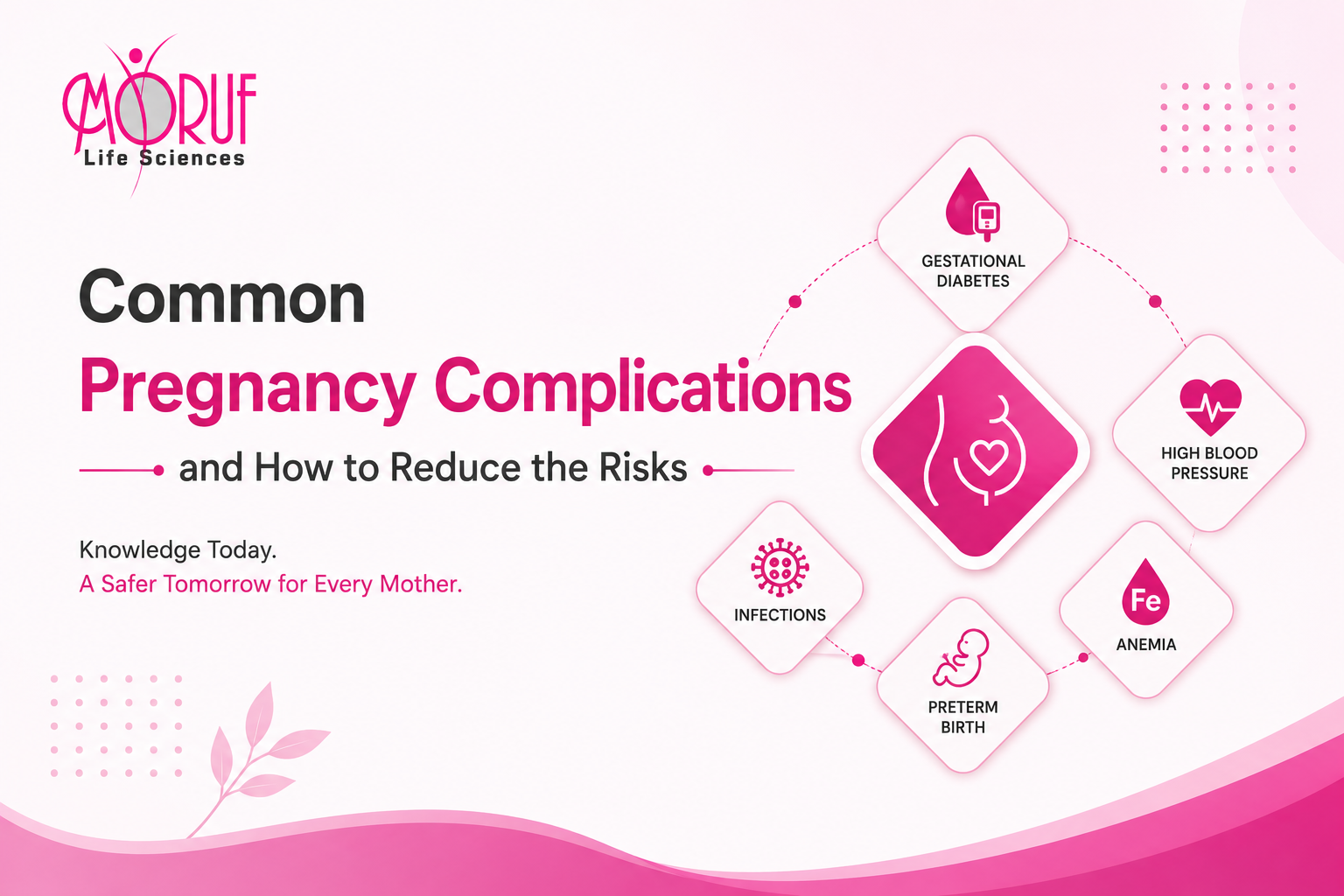
Common Pregnancy Complications
1. Gestational Diabetes
Gestational diabetes develops during pregnancy when blood sugar levels become higher than normal. If left untreated, it can increase the risk of premature birth, high birth weight, and delivery complications.
How to Reduce the Risk:
2. High Blood Pressure (Pregnancy-Induced Hypertension)
High blood pressure during pregnancy can reduce blood flow to the placenta and may lead to preeclampsia, a potentially serious condition.
How to Reduce the Risk:
3. Iron-Deficiency Anemia
Pregnant women require more iron to support increased blood production. Iron deficiency can lead to fatigue, weakness, and complications during childbirth.
How to Reduce the Risk:
4. Preterm Birth
A baby born before 37 weeks of pregnancy is considered premature. Preterm birth may lead to breathing difficulties and developmental challenges for the baby.
How to Reduce the Risk:
5. Infections During Pregnancy
Certain infections can affect both the mother and the developing baby if not treated promptly.
How to Reduce the Risk:
Importance of Proper Nutrition During Pregnancy
Nutrition plays a key role in reducing pregnancy-related risks. A healthy diet combined with quality prenatal healthcare products, pregnancy support supplements, and essential vitamins supports fetal development and maternal well-being.
Important nutrients include:
Always consult a healthcare professional before taking any supplements during pregnancy.
Regular Prenatal Care Saves Lives
Routine prenatal check-ups allow healthcare providers to monitor both maternal and fetal health. Regular screenings help detect complications early, enabling timely treatment and reducing the risk of severe outcomes.
Women should never ignore symptoms such as severe headaches, heavy bleeding, reduced fetal movement, blurred vision, severe swelling, or persistent abdominal pain.
Moruf Lifesciences: Supporting Safe Motherhood
At Moruf Lifesciences, we believe every pregnancy deserves expert care and dependable healthcare solutions. As a leading pregnancy supplements manufacturer, women healthcare manufacturing company, and gynecology medicine manufacturer India, we provide a comprehensive range of pregnancy care formulations, nutritional supplements, hormonal care products, and women's wellness solutions.
Our WHO-GMP manufacturing standards, commitment to quality, and customer-centric approach have established us as a trusted Gynae PCD Pharma Franchise partner across India. By delivering innovative healthcare products, we continue to support healthcare professionals in improving maternal and child health outcomes.
Conclusion
Although pregnancy complications can be concerning, many risks can be minimized through early diagnosis, proper nutrition, healthy lifestyle choices, and regular prenatal care. Awareness and timely medical attention are essential for ensuring a safe pregnancy and healthy delivery.
Moruf Lifesciences remains dedicated to advancing women's healthcare through high-quality pregnancy care products, innovative pharmaceutical solutions, and trusted partnerships that contribute to healthier mothers and healthier babies.
Frequently Asked Questions (FAQs)
1. What are the most common pregnancy complications?
Common pregnancy complications include gestational diabetes, high blood pressure, iron-deficiency anemia, preterm birth, and infections during pregnancy.
2. Can pregnancy complications be prevented?
While not all complications can be prevented, regular prenatal care, healthy nutrition, physical activity, and following medical advice can significantly reduce the risks.
3. Why is folic acid important during pregnancy?
Folic acid helps prevent neural tube defects and supports the healthy development of the baby's brain and spinal cord.
4. When should I contact my doctor during pregnancy?
Seek immediate medical attention if you experience heavy bleeding, severe abdominal pain, persistent headaches, blurred vision, reduced fetal movement, or fluid leakage.
5. How does Moruf Lifesciences support maternal healthcare?
Moruf Lifesciences offers high-quality pregnancy care formulations, prenatal nutritional supplements, hormonal care products, and supports healthcare businesses through its trusted Gynae PCD Pharma Franchise network.






 call us
 whatsapp
 contact us