-

-

call us
+91-9888163636



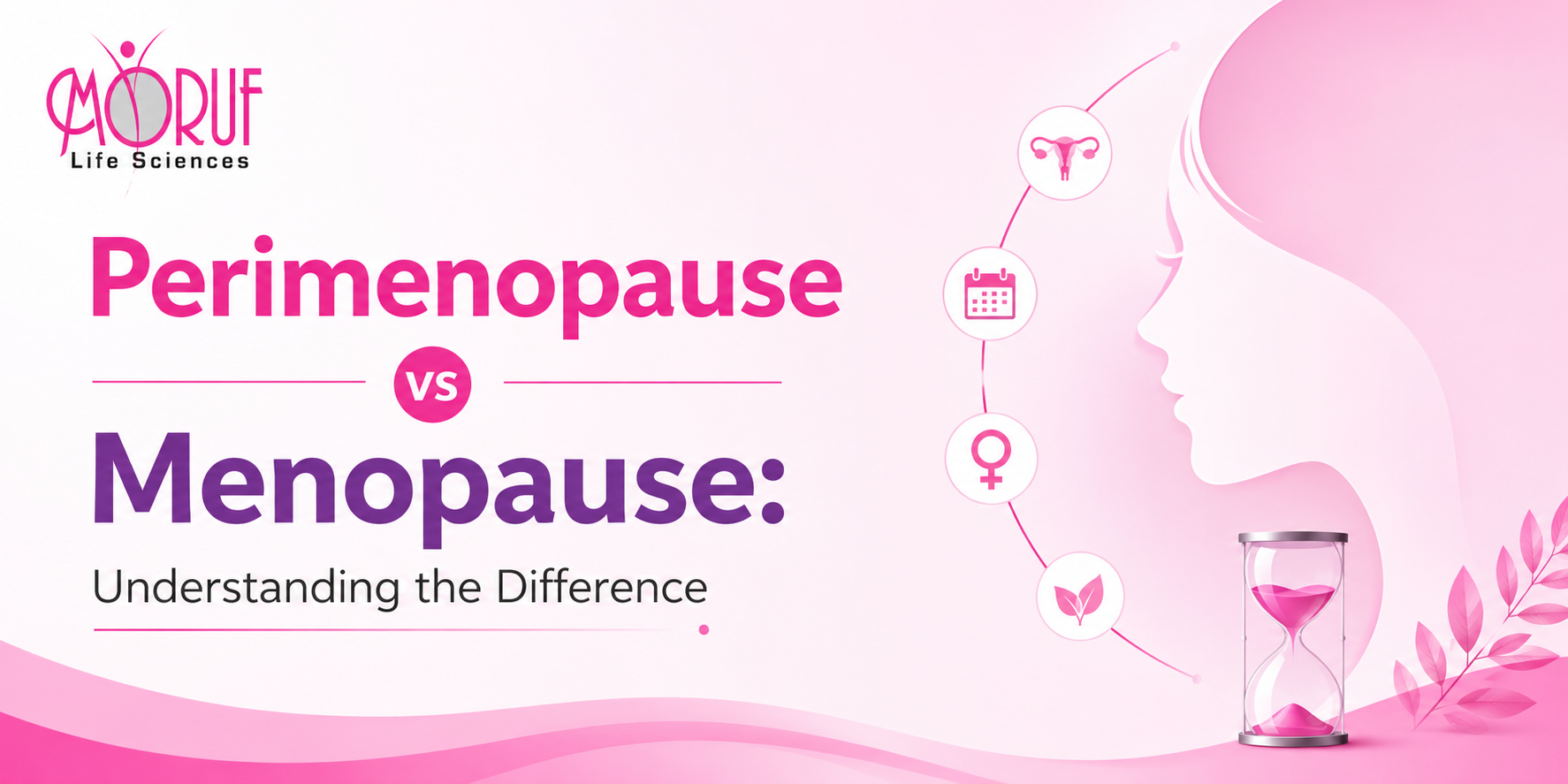
Women’s health changes significantly throughout life, and the transition from reproductive years to menopause is an important part of that journey. Two terms often used interchangeably are perimenopause and menopause, but they describe different stages. Understanding the difference can help women recognize changes in their bodies and seek appropriate healthcare when needed.
For a women’s healthcare-focused organization like Moruf Lifesciences, creating awareness around hormonal health, reproductive health, and menopause is an important part of supporting informed women's healthcare.
What Is Perimenopause?
Perimenopause is the transition period leading up to menopause. It usually begins with changes in the menstrual cycle and can continue for several years. During this phase, ovarian hormone levels fluctuate and gradually change, which can lead to different physical and emotional symptoms by World Health Organization
Women may notice:
Not every woman experiences the same symptoms, and some may have few or no noticeable symptoms. The experience of perimenopause can vary considerably from person to person.
Importantly, pregnancy is still possible during perimenopause because ovulation may continue. Women who want to avoid pregnancy should therefore continue appropriate contraception until menopause has been established.
What Is Menopause?
Menopause is not a disease; it is a natural biological stage of life. Natural menopause is confirmed retrospectively after a woman has gone 12 consecutive months without a menstrual period, when there is no other obvious physiological or medical cause.
Most women experience natural menopause between 45 and 55 years of age, although the timing varies between individuals. Menopause occurs because ovarian follicular function declines, resulting in lower circulating estrogen levels.
Once menopause has occurred, a woman enters the postmenopausal stage. Symptoms that began during the menopausal transition may continue for some women, while others experience little discomfort.
Perimenopause vs Menopause: Key Difference
The simplest way to understand the difference is:
Perimenopause = the transition toward menopause.
Menopause = the point reached after 12 consecutive months without menstruation.
| Perimenopause | Menopause |
|---|---|
| Transition leading to menopause | A defined point after the final menstrual period |
| Periods may become irregular | Menstrual periods have stopped |
| Ovulation may still occur | Natural ovulation has ended |
| Pregnancy remains possible | Natural pregnancy is no longer expected |
| Symptoms can fluctuate | Symptoms may continue after menopause |
Understanding this distinction can help women avoid assuming that every menstrual change means menopause.
How Can Women Manage This Transition?
Women can support their overall women's health by maintaining healthy lifestyle habits, staying physically active, eating a balanced diet, getting adequate sleep, and discussing symptoms with a healthcare professional.
Menopause-related symptoms can sometimes significantly affect daily activities and quality of life. Healthcare professionals can discuss suitable hormonal and non-hormonal treatment options based on an individual's symptoms, medical history, preferences, and overall health.
After menopause, attention to areas such as bone health and cardiovascular health also becomes important because changes associated with declining estrogen can influence these areas.
When Should You Speak to a Doctor?
Not every change in the menstrual cycle is caused by perimenopause. Women should discuss unusual, persistent, or concerning symptoms with a healthcare professional. In particular, bleeding after 12 months without a period should be medically evaluated rather than automatically attributed to menopause.
Professional guidance can help distinguish menopause-related changes from other gynecological or medical conditions and determine whether treatment or further evaluation is appropriate.
Moruf Lifesciences: Supporting Women's Healthcare
Women's healthcare extends beyond pregnancy and reproductive years. Hormonal health, menstrual health, fertility, pregnancy care, and menopause are all important parts of comprehensive gynecological care.
Moruf Lifesciences focuses on the broader women's healthcare and Gynae pharma segment, making awareness around different stages of women's health an important part of its healthcare-focused approach.
By encouraging women to understand hormonal changes and seek timely professional advice, healthcare organizations can contribute to better awareness and healthier aging.
Conclusion
Perimenopause and menopause are connected, but they are not the same. Perimenopause is the transition that can last several years, while menopause is confirmed after 12 consecutive months without menstruation. Symptoms and experiences vary widely among women.
Understanding these changes can help women make informed decisions about their hormonal health and overall women's healthcare. With appropriate medical guidance, healthy lifestyle practices, and individualized care, women can navigate this natural life transition with greater confidence.
FAQs
Is perimenopause the same as menopause?
No. Perimenopause is the transition leading to menopause, while menopause is confirmed after 12 consecutive months without menstruation.
At what age does perimenopause usually begin?
The timing varies, but menopause generally occurs between 45 and 55 years. The transition may begin several years before menopause.
Can you get pregnant during perimenopause?
Yes. Ovulation can still occur during perimenopause, so pregnancy remains possible.
What are common symptoms of perimenopause?
Irregular periods, hot flashes, night sweats, sleep difficulties, mood changes, and vaginal dryness are among the symptoms women may experience.



 call us
 whatsapp
 contact us