-

-

call us
+91-9888163636



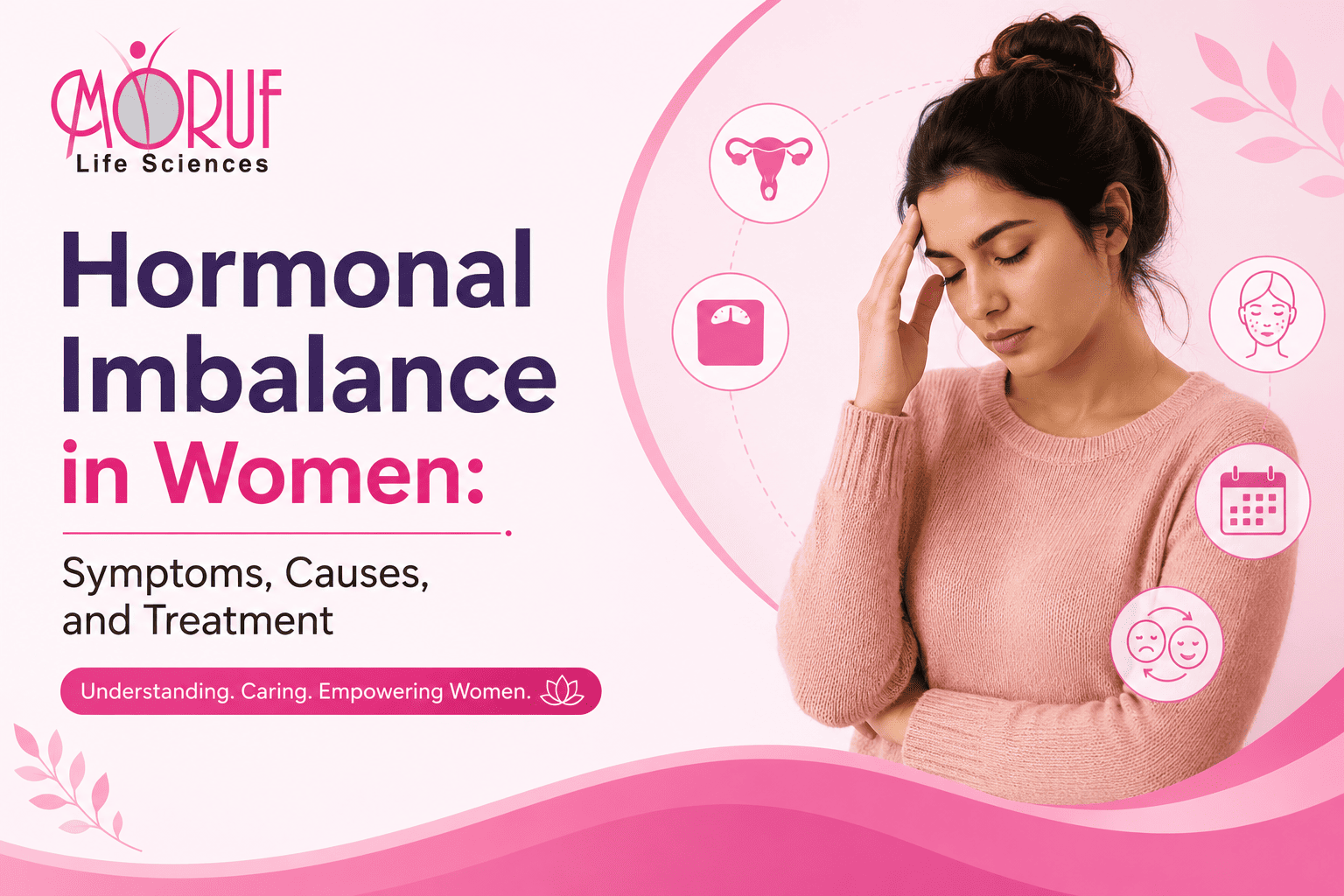
Hormones play an important role in many functions of a woman’s body, including the menstrual cycle, fertility, metabolism, mood, pregnancy, and reproductive health. When hormone levels change or become disrupted, women may experience symptoms that affect everyday life. Hormonal imbalance in women can have several possible causes, so identifying the underlying reason is an important part of appropriate care.
For women experiencing persistent menstrual, reproductive, or hormonal concerns, professional medical evaluation can help determine the cause and suitable management. Moruf Lifesciences focuses on women’s healthcare, gynaecology, and obstetric medicines, with a product portfolio covering areas such as hormonal health, fertility, pregnancy care, and nutritional support.
What Is Hormonal Imbalance in Women?
Hormonal imbalance does not refer to one specific disease. It is a general term used when hormone levels or hormonal activity are altered in a way that may contribute to symptoms. Hormones such as estrogen, progesterone, thyroid hormones, insulin, and prolactin have important roles in women's health.
Conditions such as PCOS and thyroid disorders can contribute to menstrual irregularities and other symptoms. For example, PCOS is associated with reproductive hormone imbalance and can affect periods, ovulation, fertility, and metabolism.
Hormonal imbalance in women can affect different aspects of reproductive and overall health, and symptoms may vary from one woman to another. Common concerns associated with hormonal changes include irregular periods, missed periods, heavy menstrual bleeding, acne, excess hair growth, hair thinning, unexplained weight changes, mood changes, and difficulty conceiving. Conditions such as PCOS, thyroid disorders, pregnancy, perimenopause, and elevated prolactin can affect hormone function. Because these symptoms can overlap with other medical conditions, identifying the underlying cause is more important than treating the symptoms alone. A gynecologist or qualified healthcare professional can assess the symptoms and recommend appropriate investigations and treatment.
Common Symptoms of Hormonal Imbalance in Women
Symptoms can vary considerably depending on which hormones are affected and what is causing the change. Some commonly reported signs include:
However, these symptoms do not automatically mean that a woman has a hormonal imbalance. Similar symptoms can occur with several different health conditions. Persistent or significant changes should therefore be discussed with a healthcare professional.
What Causes Hormonal Imbalance in Women?
There are many potential causes. PCOS is one important hormonal condition that can cause irregular periods, excess androgen-related symptoms, acne, weight changes, and fertility difficulties.
Other possible factors include thyroid disorders, pregnancy, perimenopause, hormonal contraception, significant weight changes, excessive exercise, stress, and certain medications. Problems involving prolactin can also affect the menstrual cycle.
Because the causes are diverse, self-diagnosing based on symptoms alone is not recommended.
How Is Hormonal Imbalance Diagnosed?
There is no single test that can diagnose every type of hormonal imbalance. A healthcare professional may consider your symptoms, menstrual history, medical history, medications, physical findings, and other relevant factors.
Depending on the suspected cause, blood tests, hormone testing, thyroid testing, pregnancy testing, ultrasound, or other investigations may be recommended. For example, PCOS does not have one single diagnostic test and requires assessment of its characteristic features while excluding other possible causes.
Managing hormonal health in women depends on the underlying cause, but healthy lifestyle habits can support overall well-being. A balanced diet, regular physical activity, adequate sleep, stress management, and maintaining a healthy weight may be beneficial for women with certain hormone-related conditions, including PCOS. However, lifestyle changes should not replace medical treatment when a hormonal or reproductive disorder has been diagnosed. Women with persistent symptoms should consult a gynecologist for appropriate evaluation rather than relying on hormonal supplements or self-medication. Treatment may differ significantly depending on whether the underlying issue involves PCOS, thyroid function, prolactin, reproductive hormones, pregnancy, or menopause.
Treatment for Hormonal Imbalance in Women
Treatment depends entirely on the underlying cause, symptoms, age, reproductive goals, and overall health. There is no universal hormonal imbalance treatment for women.
Depending on the diagnosis, management may involve lifestyle changes, nutritional support, medicines, hormonal therapies, or fertility treatment. For PCOS, for example, treatment may focus on managing individual symptoms, improving metabolic health, regulating periods, or addressing fertility concerns.
Moruf Lifesciences offers a specialized gynae product range that includes products related to fertility, hormonal health, nutritional supplementation, and women's reproductive healthcare. Its listed portfolio includes formulations such as Ferjoy-PCO, Mytermcare, Moruf-CE, Estowar, Mofert, and other gynaecology-focused products.
These medicines and formulations should be used only according to the advice of a qualified healthcare professional and should not be self-prescribed.
When Should You See a Doctor?
Consult a healthcare professional if you experience persistent irregular periods, unusually heavy bleeding, unexplained weight changes, significant acne or hair changes, difficulty conceiving, or other symptoms that concern you. NHS guidance also recommends medical evaluation when periods become irregular or their normal pattern changes.
Conclusion
Hormonal imbalance in women can present through menstrual, reproductive, metabolic, skin, hair, or mood-related changes. However, these symptoms can have many causes, so proper evaluation is essential before starting treatment.
Understanding hormonal health, maintaining healthy lifestyle habits, attending recommended health checkups, and seeking timely medical advice can support better women's healthcare. With its dedicated focus on gynaecology, obstetrics, fertility, hormonal health, and women's healthcare, Moruf Lifesciences aims to contribute to a broader healthcare portfolio for women across different stages of life.
Frequently Asked Questions (FAQs)
1. What are the symptoms of hormonal imbalance in women?
Common symptoms may include irregular or missed periods, heavy menstrual bleeding, acne, unwanted hair growth, hair thinning, unexplained weight changes, fatigue, mood changes, and difficulty becoming pregnant. These symptoms can have several causes and do not necessarily indicate a hormonal imbalance.
2. What causes hormonal imbalance in women?
Possible causes include PCOS, thyroid disorders, pregnancy, perimenopause, menopause, changes in body weight, excessive exercise, stress, certain medications, hormonal contraception, and conditions affecting prolactin levels.
3. How is hormonal imbalance diagnosed in women?
Diagnosis depends on the suspected cause. A healthcare professional may review symptoms and menstrual history and may recommend blood tests, thyroid testing, pregnancy testing, hormone testing, ultrasound, or other investigations.
4. Can PCOS cause hormonal imbalance?
Yes. PCOS is a hormonal and metabolic condition that can affect ovulation, menstrual cycles, androgen levels, fertility, and metabolic health.
5. Can hormonal imbalance affect periods?
Yes. Changes in reproductive or thyroid hormones can contribute to irregular, missed, or unusually heavy periods. Persistent changes in the normal menstrual pattern should be evaluated by a healthcare professional.
6. Can hormonal imbalance affect fertility?
Some hormonal conditions can affect ovulation and therefore make it more difficult to become pregnant. Conditions such as PCOS and thyroid disorders may affect reproductive function.
7. Can hormonal imbalance be treated?
Treatment depends on the underlying cause. Depending on the diagnosis, management may include lifestyle changes, medicines, hormonal therapy, nutritional support, or fertility treatment under professional medical guidance.
8. Can lifestyle changes help with hormonal health?
Healthy eating, regular physical activity, adequate sleep, stress management, and maintaining a healthy weight can support overall health and may benefit some hormone-related conditions. However, lifestyle measures do not replace appropriate medical treatment.
9. When should I see a doctor for hormonal imbalance symptoms?
Consider consulting a healthcare professional if you have persistent irregular periods, unusually heavy bleeding, significant changes in weight, persistent acne or hair changes, difficulty conceiving, or other symptoms that concern you.
10. Does Moruf Lifesciences provide women's healthcare products?
Moruf Lifesciences offers a portfolio focused on gynecology, obstetrics, fertility, hormonal health, pregnancy care, and nutritional support. Its products should be used only under the guidance of a qualified healthcare professional.
Contact information
Name – Moruf Lifesciences
Phone Numbers – +91-9888163636
Email - moruflifesciences0719@gmail.com
Address: SCO 5-6, Wadhawa Nagar, Near Hotel Sunpark, Kalka Highway, Zirakpur, Punjab, India – 140603
Read more about -






 call us
 whatsapp
 contact us