-

-

call us
+91-9888163636



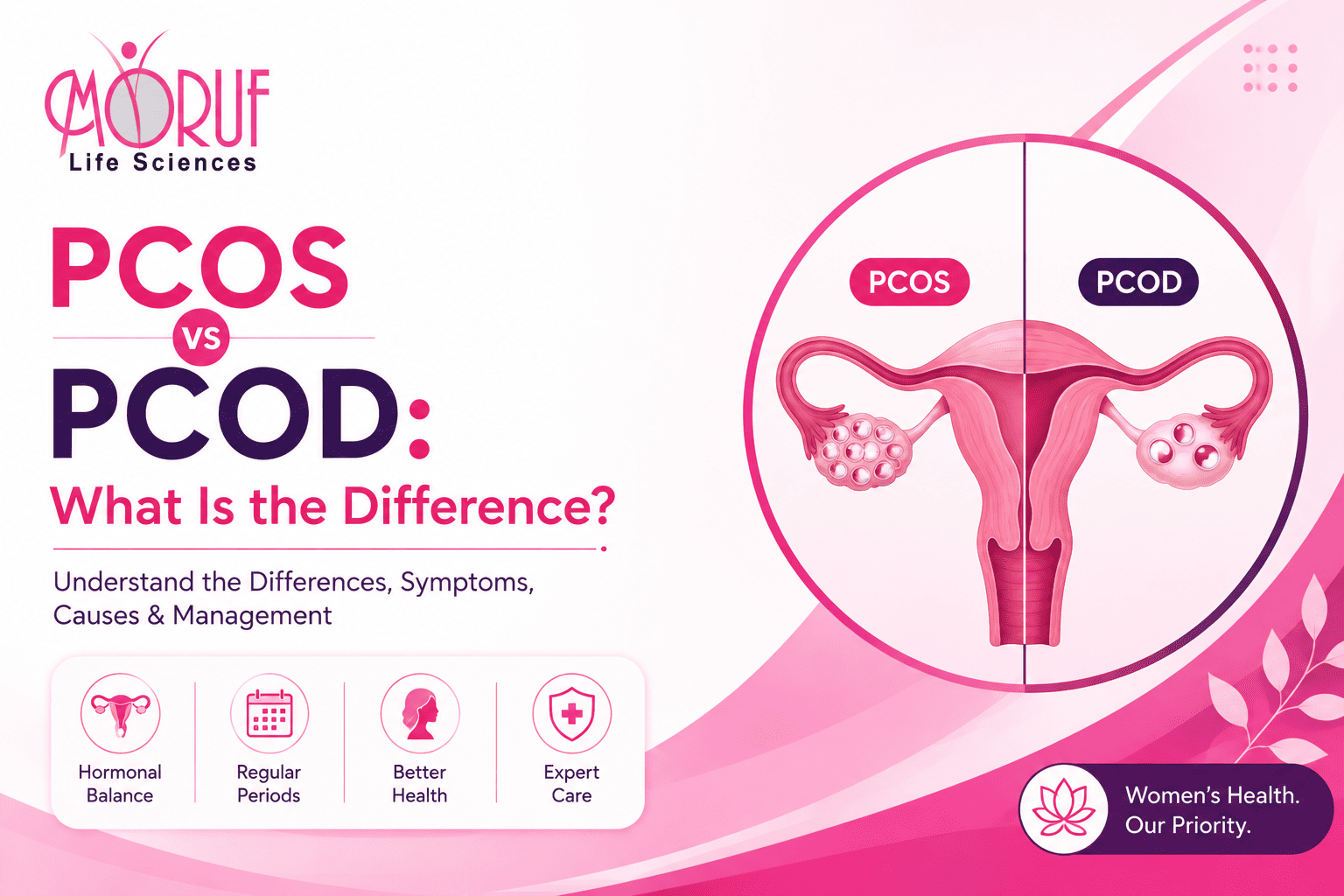
PCOS and PCOD are terms commonly used when discussing women's hormonal health, irregular periods, and reproductive concerns. Because the names sound similar, many women ask: Is PCOS and PCOD the same? What is the difference between PCOS and PCOD?
Although these terms are often used interchangeably in India, they are not equally standardized in modern medical practice. PCOS (Polycystic Ovary Syndrome) is a recognised hormonal and metabolic condition with established diagnostic criteria. PCOD (Polycystic Ovarian Disease) is a commonly used term, but it does not have the same universally accepted diagnostic definition.
Understanding the difference between PCOS and PCOD can help women recognise symptoms, seek appropriate medical evaluation, and make informed decisions about their reproductive health.
Polycystic Ovary Syndrome (PCOS) is a common hormonal condition that can affect menstrual cycles, ovulation, fertility, skin, hair growth, and metabolic health during and beyond the reproductive years.
According to the World Health Organization (WHO), PCOS is diagnosed after other possible causes have been excluded and at least two of the following features are identified in adults:
Irregular or absent ovulation, often associated with irregular menstrual periods.
Clinical or blood-test evidence of elevated androgen levels, which may contribute to acne or excess facial and body hair.
Polycystic ovarian appearance on ultrasound.
Importantly, not every woman with PCOS has polycystic-appearing ovaries, and the presence of ovarian cysts is not essential for diagnosis. Current international guidance also allows anti-Müllerian hormone (AMH) testing as an alternative to ultrasound in certain adult diagnostic pathways.
Common PCOS symptoms include:
Irregular, infrequent, or missed periods
Difficulty with ovulation or conception
Persistent acne or oily skin
Excess facial or body hair
Hair thinning on the scalp
Weight changes or metabolic concerns
PCOS is also associated with an increased risk of insulin resistance, type 2 diabetes, and other metabolic complications. Symptoms and their severity vary from person to person.
For further information, read the WHO fact sheet on PCOS.
PCOD stands for Polycystic Ovarian Disease, a term commonly used in India to describe ovarian and hormonal concerns associated with irregular ovulation and changes in ovarian appearance.
However, PCOD does not have one universally accepted modern diagnostic definition equivalent to the established criteria used for PCOS. As a result, the meaning of PCOD can vary depending on how the term is used by individuals or healthcare providers.
Women experiencing irregular periods, acne, or changes in ovarian appearance on an ultrasound should not automatically assume they have PCOD or PCOS. These symptoms may have several possible causes, and a qualified healthcare professional can determine whether further investigation is needed.
The main difference between PCOS and PCOD is the terminology and the level of standardisation in their diagnostic definitions.
| Feature | PCOD | PCOS |
|---|---|---|
| Full form | Polycystic Ovarian Disease | Polycystic Ovary Syndrome |
| Medical terminology | Commonly used, but less standardised | Established clinical syndrome |
| Hormonal changes | May be used to describe ovarian or hormonal concerns | Hormonal and ovulatory dysfunction may be present |
| Menstrual cycles | Irregular periods may occur | Irregular or absent periods may occur |
| Fertility | Fertility may be affected depending on the underlying issue | Ovulation difficulties can affect fertility |
| Metabolic health | Depends on the underlying condition | Associated with increased metabolic health risks |
| Diagnosis | Depends on the clinical meaning of the term | Uses established diagnostic criteria after excluding other causes |
| Management | Depends on the actual condition identified | Individualised according to symptoms, risks, and reproductive goals |
Key takeaway: PCOS is a defined clinical syndrome, whereas PCOD is a less standardised term. The two should not automatically be treated as separate, clearly defined medical diagnoses with universally accepted differences in severity.
Symptoms associated with PCOS and those described as PCOD can overlap considerably. This is one reason people often search for the difference between PCOS and PCOD.
Possible symptoms include:
Irregular menstrual cycles
Acne or oily skin
Excess facial or body hair
Scalp hair thinning
Difficulty conceiving
Changes in weight or metabolic health
However, these symptoms are not specific to PCOS or PCOD. Thyroid disorders, elevated prolactin, and other hormonal or reproductive conditions can cause similar problems.
An ultrasound report showing multiple ovarian follicles alone does not establish a PCOS diagnosis. A healthcare professional considers the overall clinical picture rather than relying on one symptom or test.
The causes depend on the underlying condition. PCOS is a complex disorder involving hormonal and metabolic factors, with genetic influences also contributing to susceptibility.
Factors associated with PCOS include:
Hormonal changes: Elevated androgen levels can contribute to acne, excess hair growth, and ovulatory dysfunction.
Insulin-related factors: Insulin resistance is common in PCOS and can influence metabolic and hormonal function.
Genetic susceptibility: PCOS can run in families, although having a family history does not guarantee that someone will develop it.
Ovulatory dysfunction: Irregular ovulation can contribute to unpredictable menstrual cycles and difficulty conceiving.
PCOS is not simply caused by lifestyle choices, and it can affect women with different body types. Its development and presentation vary between individuals.
For concerns described as PCOD, medical evaluation is important to establish the underlying cause instead of assuming that every case has the same mechanism.
A gynaecologist may review menstrual history, symptoms, medical history, and relevant examination findings before recommending investigations.
Depending on the individual, evaluation may include:
Menstrual and symptom history: Understanding cycle patterns, acne, excess hair growth, and fertility concerns.
Blood tests: Assessing androgen levels and investigating other possible hormonal causes when indicated.
Metabolic assessment: Evaluating glucose regulation and other metabolic risks where appropriate.
Ultrasound or other investigations: Used when clinically indicated as part of the diagnostic assessment.
Not every woman needs every test. In adults with irregular cycles and clear signs of elevated androgens, current international guidance indicates that ultrasound or AMH testing may not be necessary to establish PCOS.
Adolescents require particular care because normal pubertal changes can resemble PCOS features, and adult diagnostic criteria cannot simply be applied in the same way.
Management depends on the diagnosis, symptoms, overall health, and whether the woman is planning a pregnancy. There is no single treatment that is appropriate for everyone.
A balanced diet, regular physical activity, adequate sleep, and sustainable health habits can support overall wellbeing. For women with PCOS, lifestyle interventions can help improve metabolic health and may support menstrual and hormonal management.
These measures should be individualised and should not be presented as a guaranteed cure.
A healthcare professional may recommend medication depending on the symptoms and treatment goals. Options may be used to manage menstrual irregularities, acne, excess hair growth, metabolic concerns, or difficulties with ovulation and conception.
Treatment should be selected according to the individual's needs, medical history, and clinical assessment.
PCOS does not automatically mean infertility. Many women with PCOS can conceive, although irregular ovulation may make conception more difficult for some. Women planning a pregnancy should discuss appropriate evaluation and treatment options with a qualified healthcare professional.
Self-medication with hormonal products or supplements should be avoided.
Consider consulting a qualified gynaecologist if you experience persistent irregular or missed periods, difficulty conceiving, significant acne, excess facial or body hair, or unexplained changes in your health.
Seek medical advice rather than relying solely on an ultrasound report or online symptom checklist. Early assessment can help identify the underlying cause and guide appropriate management.
Access to relevant women's healthcare products is one part of the broader reproductive healthcare ecosystem. Moruf Life Sciences focuses on gynaecology and obstetrics formulations, including products listed for PCOS-related healthcare needs, such as Ferjoy-PCO and Ferjoy-IN.
Healthcare professionals should evaluate the suitability of any product for an individual patient based on its approved product information and clinical requirements. These products are not substitutes for diagnosing or managing PCOS and should be used under appropriate medical guidance.
Moruf Life Sciences also offers a specialised portfolio for businesses exploring a Gynae PCD Pharma Franchise Company partnership. Entrepreneurs researching a PCD Pharma Franchise Company can review the company's product range, franchise terms, and available territory arrangements through its official website.
The difference between PCOS and PCOD lies largely in how the terms are medically defined and used. PCOS is a recognised hormonal and metabolic syndrome with established diagnostic criteria, while PCOD is a less standardised term commonly used in India.
Because symptoms such as irregular periods, acne, and fertility difficulties can have several causes, an appropriate medical evaluation is more useful than relying on terminology alone. Understanding the condition, identifying individual health needs, and following professional medical advice are important steps towards better reproductive health.
Medical disclaimer: This article is for educational purposes only and does not replace professional medical advice, diagnosis, or treatment. Consult a qualified healthcare professional for individual concerns.
Name – Moruf Lifesciences
Phone Numbers – +91-9888163636
Email - moruflifesciences0719@gmail.com
Address: SCO 5-6, Wadhawa Nagar, Near Hotel Sunpark
Kalka Highway, Zirakpur, Punjab, India – 140603
Hormonal imbalance in women
PCOS and weight gain
Women's health through every life stage
Best Gynae PCD Pharma Franchise



 call us
 whatsapp
 contact us