
-

-

call us
+91-9888163636



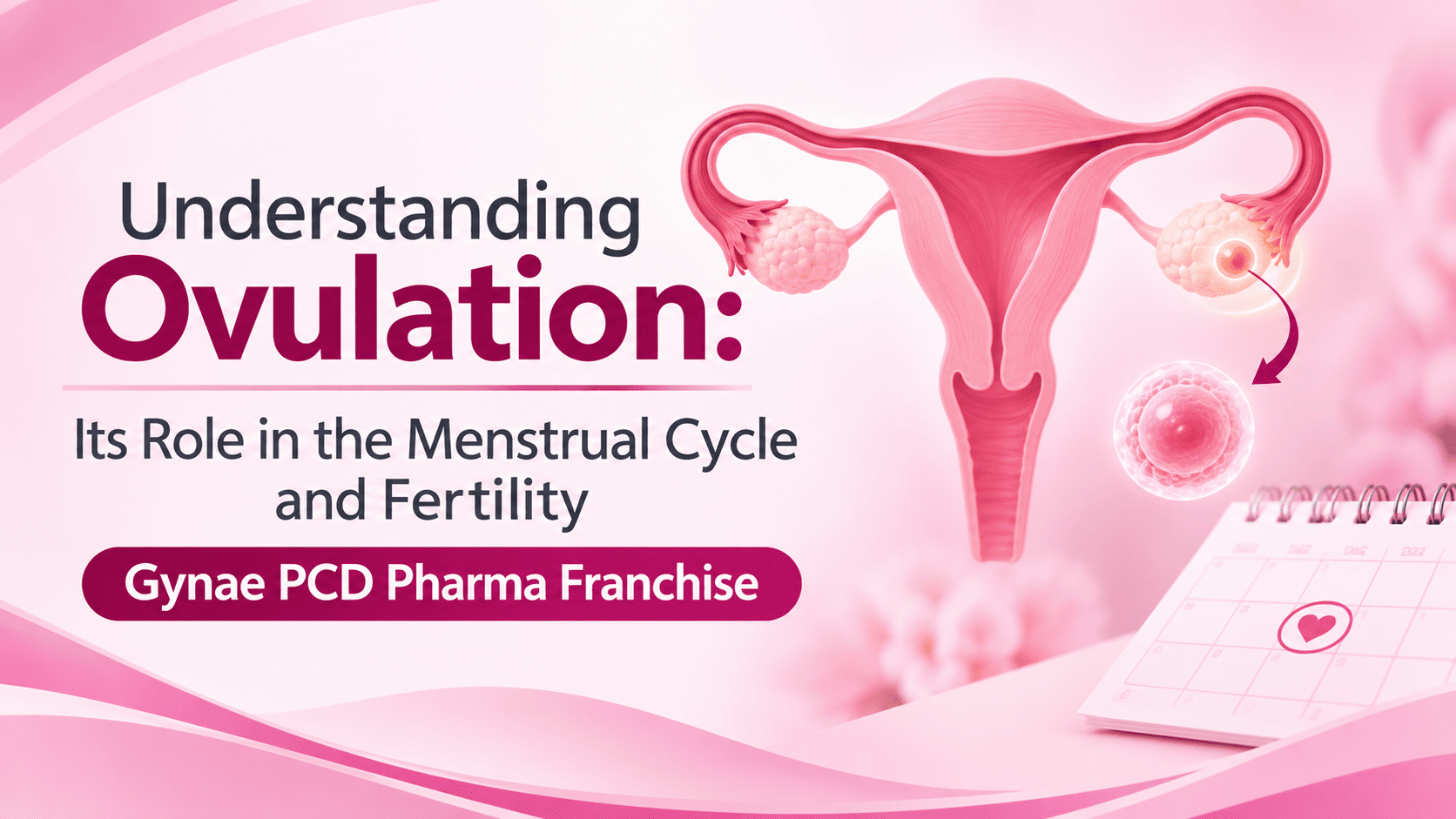
Ovulation is an important part of the menstrual cycle and plays a central role in female fertility. It is the process through which an ovary releases a mature egg, making fertilisation possible. When ovulation does not occur regularly, it can affect menstrual patterns and make conception more challenging.
Conditions such as polycystic ovary syndrome (PCOS) and other hormonal disturbances may influence ovulation. Understanding the process, the medicines used in selected fertility treatments and the available reproductive healthcare formulations is therefore important for healthcare professionals and pharmaceutical distributors.
For businesses exploring a Gynae PCD Pharma Franchise, fertility and ovulation-related products represent an important therapeutic category within the gynaecology portfolio.
This article explains the role of ovulation in the menstrual cycle, common ovulation-related concerns and relevant products listed by Moruf Lifesciences.
Ovulation is the release of a mature egg from an ovary during the menstrual cycle. The released egg travels into the fallopian tube, where it may meet sperm and undergo fertilisation.
Ovulation is regulated by reproductive hormones that coordinate the development and release of the egg. The process is closely associated with the menstrual cycle and the body's preparation for a possible pregnancy.
If fertilisation occurs, the resulting embryo may implant in the uterus. If fertilisation does not occur, hormone levels change and menstruation generally follows.
Regular ovulation is therefore an important factor in natural conception.
The menstrual cycle involves coordinated changes in the ovaries and uterus. It can broadly be understood through three phases.
The follicular phase begins on the first day of menstruation. During this phase, follicle-stimulating hormone (FSH) supports the development of ovarian follicles, each of which contains an immature egg.
As the follicles develop, one generally becomes dominant and continues towards maturity. Oestrogen levels also rise during this phase, helping prepare the uterine lining.
Ovulation usually occurs around the middle of the menstrual cycle, although its timing varies between individuals and cycles.
A rise in luteinising hormone (LH), known as the LH surge, triggers the release of the mature egg from the ovary.
The released egg remains available for fertilisation for a limited period. This makes the timing of ovulation relevant to the fertile window.
After ovulation, the follicle from which the egg was released develops into a structure called the corpus luteum.
The corpus luteum produces progesterone, which helps prepare and maintain the uterine lining for a possible pregnancy.
If pregnancy does not occur, hormone levels decline and menstruation begins, starting another menstrual cycle.
Irregular or absent ovulation is known as ovulatory dysfunction. It can affect the timing and regularity of menstrual cycles and may contribute to difficulty conceiving.
Several factors can be associated with ovulatory irregularities, including:
Polycystic ovary syndrome (PCOS).
Hormonal disturbances.
Thyroid-related conditions.
Changes in body weight.
Certain reproductive or endocrine conditions.
PCOS is one important condition associated with irregular ovulation. It can involve hormonal and metabolic changes that affect normal ovarian function.
Women experiencing irregular periods, missed cycles or difficulty conceiving may require medical evaluation to identify the underlying cause.
Understanding whether ovulation is occurring is an important part of fertility assessment. Healthcare professionals may use different methods depending on the patient's menstrual history and clinical requirements.
Common assessment approaches include:
Menstrual cycle tracking: Recording menstrual dates and cycle patterns can help identify irregularities.
Ovulation predictor tests: These tests detect the LH surge that generally occurs before ovulation.
Hormonal assessment: Selected blood tests may help evaluate reproductive hormone levels and determine whether ovulation has occurred.
Ultrasound monitoring: A healthcare professional may use ultrasound to assess follicular development and monitor ovulation during fertility treatment.
The appropriate assessment method depends on the individual's symptoms, medical history and fertility goals.
Ovulation induction refers to the medical process of stimulating or supporting ovulation in women who do not ovulate regularly or require fertility treatment.
These medicines are prescribed after evaluating the underlying cause of ovulatory dysfunction.
Some commonly used ovulation-induction medicines listed in Moruf Lifesciences' product portfolio for Gynae PCD Pharma Franchise include clomifene citrate and letrozole.
Clomifene citrate is a prescription medicine used in selected fertility treatment plans to stimulate ovulation.
It acts on hormonal feedback mechanisms involved in the regulation of reproductive hormones, helping stimulate the processes associated with follicular development and ovulation.
Products for Gynae PCD Pharma Franchise:
MOFERT-25: Clomifene citrate 25 mg.
MOFERT-50: Clomifene citrate 50 mg.
MOFERT-100: Clomifene citrate 100 mg.
These formulations are listed in Moruf's fertility-related product portfolio. The strength and suitability of treatment are determined by the treating specialist.
Letrozole is an aromatase inhibitor used in selected ovulation-induction protocols, particularly in women with PCOS-related anovulatory infertility.
It works by reducing oestrogen production through inhibition of the aromatase enzyme. This can influence hormonal feedback and support follicular development in appropriately selected patients.
Products for Gynae PCD Pharma Franchise:
MYLETRO-2.5: Letrozole 2.5 mg.
MYLETRO-5: Letrozole 5 mg.
These products are part of Moruf's listed fertility medicine range. Letrozole and clomifene are different medicines and are not interchangeable without clinical assessment.
Ovulation-induction treatment requires medical supervision. The choice of medicine, dosage and monitoring schedule should be determined by a qualified fertility specialist.
Progesterone is an important reproductive hormone produced primarily by the corpus luteum after ovulation.
During the luteal phase, progesterone helps prepare the uterine lining for possible implantation. It also plays a role in supporting the early stages of pregnancy.
Progesterone formulations may be prescribed for specific reproductive and gynaecological indications, depending on the patient's clinical circumstances.
Moruf's published catalogue includes several natural micronised progesterone formulations:
| Product | Listed composition |
|---|---|
| MOPREG-100 | Natural micronised progesterone 100 mg |
| MOPREG-200 | Natural micronised progesterone 200 mg |
| MOPREG-300 SR | Natural micronised progesterone 300 mg sustained release |
| MOPREG-400 | Natural micronised progesterone 400 mg |
| MOPREG-200 Injection | Natural micronised progesterone 200 mg injection |
| MOPREG-100 Injection | Natural micronised progesterone 100 mg injection |
These products represent different strengths and dosage forms within Moruf's progesterone portfolio.
Progesterone is not an ovulation-induction medicine. It has a different role in reproductive healthcare, and its use should be based on the specific medical indication and a specialist's prescription.
Polycystic ovary syndrome is one of the important conditions associated with ovulatory dysfunction.
In women with PCOS, hormonal and metabolic changes may interfere with the normal development and release of an egg. This can result in irregular menstrual cycles and difficulty predicting ovulation.
PCOS-related fertility management may involve lifestyle interventions, metabolic assessment and prescription treatment depending on the individual's requirements.
Moruf have FERJOY-IN with the following composition:
Myo-inositol 550 mg.
D-chiro-inositol 13.8 mg.
Chromium 100 mcg.
Vitamin D3 200 IU.
Moruf have FERJOY-PCO with:
Myo-inositol 550 mg.
D-chiro-inositol 13.8 mg.
Chromium 100 mcg.
Metformin HCl 500 mg.
L-methylfolate calcium 0.5 mg.
Mecobalamin 750 mcg.
These formulations belong to Moruf's PCOS-related product portfolio for Gynae PCD Pharma Franchise. They should be evaluated according to their individual compositions and approved product information.
It is important to distinguish between PCOS-related nutritional or metabolic formulations and prescription medicines used specifically for ovulation induction. They have different roles in reproductive healthcare.
Moruf Lifesciences offers products across several areas of gynaecology and reproductive healthcare. Its published catalogue includes medicines and formulations associated with ovulation induction, progesterone support and PCOS-related care.
The following table summarises selected products relevant to these categories.
| Therapeutic category | Moruf products |
|---|---|
| Ovulation induction | MOFERT-25, MOFERT-50, MOFERT-100 |
| Letrozole formulations | MYLETRO-2.5, MYLETRO-5 |
| Progesterone formulations | MOPREG range |
| PCOS-related formulations | FERJOY-IN, FERJOY-PCO |
| Other fertility-related nutritional formulations | FERJOY-F, FERJOY-M, FERJOY-Q10 |
The exact product composition, approved indications, dosage form and availability should be verified through Moruf's latest product information.
Fertility and reproductive healthcare are specialised segments within the broader gynaecology pharmaceutical market.
For distributors exploring a Gynae PCD Pharma Franchise, understanding this category can help in evaluating the range of medicines offered by a pharmaceutical company.
Some important considerations include:
1. Specialised therapeutic coverage
A fertility-focused portfolio may include ovulation-induction medicines, progesterone formulations and products for PCOS-related healthcare.
2. Different strengths and formulations
Medicines such as clomifene citrate, letrozole and progesterone are available in different strengths and dosage forms. Understanding these distinctions is important for product knowledge.
3. Product documentation
Prescription fertility medicines require clear information about their composition, approved indications, dosage and relevant precautions.
4. Responsible product communication
Distributors should communicate product information accurately and avoid claims that a formulation guarantees ovulation, pregnancy or successful conception.
5. Portfolio depth
A company offering products across multiple gynaecology categories gives distributors an opportunity to evaluate a broader women's healthcare range.
Moruf Lifesciences focuses on gynaecology and obstetrics medicines, with a product catalogue covering fertility-related medicines, hormonal formulations, PCOS-related products, pregnancy care and other women's healthcare categories.
Its fertility-related range for Gynae PCD Pharma Franchise includes MOFERT, MYLETRO, MOPREG and FERJOY formulations, covering different therapeutic areas within reproductive healthcare.
For distributors interested in a Gynae PCD Pharma Franchise, evaluating the product range, composition, documentation, availability and franchise terms is an important step before selecting a pharmaceutical partner.
Moruf Lifesciences offers a specialised women's healthcare portfolio for prospective franchise partners to explore.
Visit the official website: Moruf Lifesciences.
Ovulation is the release of a mature egg from an ovary. It generally occurs once during a menstrual cycle and creates an opportunity for fertilisation.
Clomifene citrate and letrozole are prescription medicines used in selected ovulation-induction treatment plans. The choice depends on the patient's diagnosis and clinical assessment.
Moruf's catalogue includes MOFERT-25, MOFERT-50 and MOFERT-100, containing clomifene citrate, as well as MYLETRO-2.5 and MYLETRO-5, containing letrozole.
Progesterone is involved in the luteal phase of the menstrual cycle. It helps prepare the uterine lining for possible implantation and supports early pregnancy. Progesterone medicines may be prescribed for specific clinical indications.
PCOS can involve hormonal and metabolic changes that interfere with normal ovulation. Some women with PCOS experience irregular menstrual cycles or difficulty conceiving.
Moruf's catalogue includes FERJOY-IN and FERJOY-PCO, among other formulations associated with women's hormonal and metabolic healthcare.
Fertility medicines form a specialised category within gynaecology. A portfolio covering ovulation-induction medicines, progesterone formulations and PCOS-related products allows distributors to evaluate a broader reproductive healthcare range.
Ovulation is a central process in the menstrual cycle and an important factor in female fertility. From follicular development and egg release to the role of progesterone during the luteal phase, several hormonal processes work together to support reproductive health.
For pharmaceutical distributors, understanding these processes provides useful context when evaluating fertility-related products. Moruf Lifesciences' catalogue includes clomifene citrate, letrozole, progesterone and PCOS-related formulations across its reproductive healthcare range.
For businesses exploring a Gynae PCD Pharma Franchise, this product coverage offers a starting point for understanding the fertility segment within the wider women's healthcare market.
Medical disclaimer: This article is intended for general educational and pharmaceutical business awareness. It does not replace medical advice. Ovulation-induction medicines and hormonal formulations must only be used under the supervision of a qualified healthcare professional. Always verify current product compositions, approved indications and regulatory documentation before promotion or distribution.
Name – Moruf Lifesciences
Phone Numbers – +91-9888163636
Email - moruflifesciences0719@gmail.com
Address: SCO 5-6, Wadhawa Nagar, Near Hotel Sunpark
Kalka Highway, Zirakpur, Punjab, India – 140603
Hormonal imbalance in women
PCOS and weight gain
Women's health through every life stage
Best Gynae PCD Pharma Franchise






 call us
 whatsapp
 contact us